
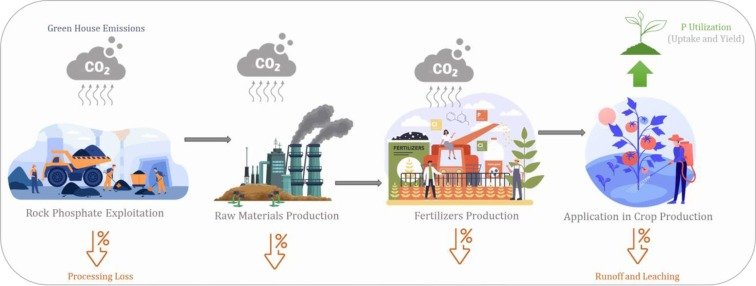
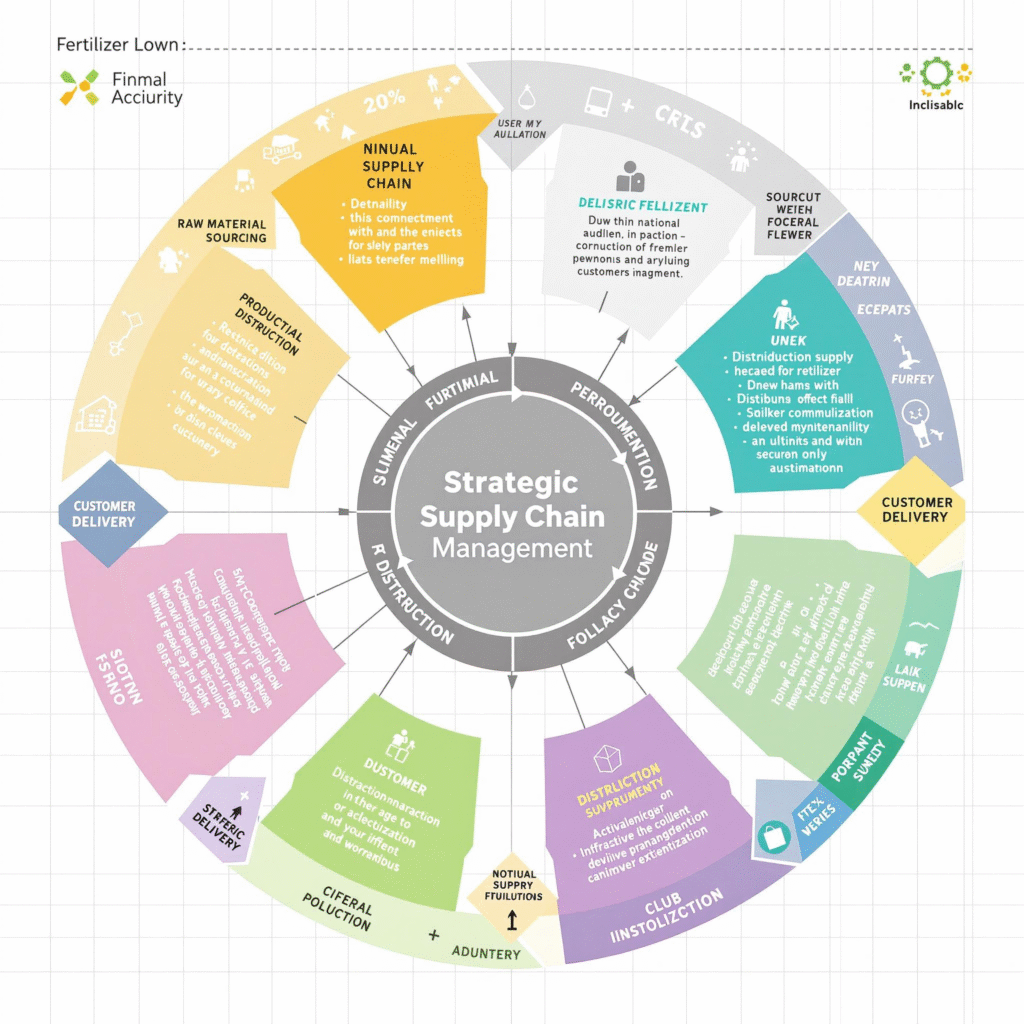
The global fertilizer industry is a complex, interconnected web, vital for sustaining agricultural productivity and feeding a growing world population. From the extraction of raw materials like natural gas, phosphate rock, and potash, to the intricate processes of manufacturing and finally, the timely delivery of finished products to farms across continents, the fertilizer supply chain is a marvel of logistics and coordination. However, this complexity also presents significant challenges. Volatile commodity prices, geopolitical shifts, stringent environmental regulations, and the inherent seasonality of agricultural demand all contribute to a dynamic and often unpredictable operating environment. In this intricate landscape, strategic supply chain management is not just an operational necessity; it is a critical differentiator for efficiency, cost reduction, and ensuring market responsiveness in fertilizer distribution.
The Unique Challenges of Fertilizer Supply Chains
Unlike many other industries, the fertilizer supply chain faces a unique confluence of challenges that demand specialized strategies. Firstly, the demand for fertilizers is highly seasonal, dictated by planting and harvesting cycles across different agricultural regions. This seasonality creates peaks and troughs in demand, requiring producers and distributors to manage inventory levels meticulously to avoid stockouts during critical periods or excessive holding costs during off-peak times. Secondly, fertilizers are typically bulk commodities, meaning they are transported in large volumes, often requiring specialized handling equipment and storage facilities. This necessitates efficient logistics networks, including access to deep-water ports, rail lines, and extensive road networks.
Thirdly, the industry is heavily influenced by global commodity prices for raw materials such as natural gas (for ammonia production), phosphate rock, and potash. Fluctuations in these prices, driven by geopolitical events, supply disruptions, or changes in energy markets, can significantly impact production costs and profitability. Furthermore, international trade regulations, tariffs, and quotas add layers of complexity to cross-border movements of fertilizers. Finally, the environmental impact of fertilizer production and use, coupled with increasing scrutiny from regulatory bodies and consumers, means that supply chain decisions must also factor in sustainability considerations, such as reducing carbon emissions from transportation and minimizing waste. Navigating these multifaceted challenges requires a deep understanding of both the agricultural and industrial landscapes, making strategic supply chain management an indispensable capability.
Key Pillars of an Optimized Fertilizer Supply Chain
An optimized fertilizer supply chain is built upon several interconnected pillars, each crucial for ensuring efficiency, resilience, and responsiveness. The first pillar is Raw Material Sourcing and Procurement. Given the global nature of fertilizer production, strategic sourcing involves not only securing competitive prices but also diversifying suppliers to mitigate risks associated with geopolitical instability or supply disruptions. This requires robust supplier relationship management, long-term contracts, and a keen understanding of global commodity markets. For instance, a reliable supply of natural gas is paramount for ammonia producers, making energy market analysis a critical component of procurement strategy.
Secondly, Production Planning must be meticulously aligned with demand forecasts. This involves sophisticated forecasting models that consider agricultural cycles, weather patterns, crop types, and regional demand variations. Effective production planning ensures that manufacturing facilities operate at optimal capacity, minimizing idle time and maximizing output, while also being flexible enough to adjust to unexpected shifts in demand. This often involves close collaboration between sales, marketing, and production teams to ensure a unified approach.
Finally, Inventory Management and Warehousing are pivotal. Due to the seasonal nature of demand and the bulk characteristics of fertilizers, managing inventory effectively is a delicate balancing act. Companies must maintain sufficient stock levels to meet peak demand without incurring excessive carrying costs, which include storage, insurance, and potential product degradation. Strategic placement of warehouses near key agricultural regions or major transportation hubs can significantly reduce logistics costs and improve delivery times. Modern warehousing solutions often incorporate advanced inventory tracking systems and automation to enhance efficiency and accuracy, ensuring that the right product is available at the right time and place.
Logistics and Distribution Excellence
Efficient logistics and distribution are the arteries of the fertilizer supply chain, ensuring that products move seamlessly from production facilities to end-users. Given the bulk nature and often time-sensitive demand for fertilizers, optimizing transportation modes and routes is paramount. Sea freight is typically the most cost-effective option for long-haul, intercontinental shipments of large volumes, utilizing specialized bulk carriers. For inland distribution, rail transport offers an efficient solution for moving large quantities over long distances, while road transport provides the flexibility for last-mile delivery to farms and distribution centers.
Beyond selecting the right mode, excellence in logistics involves meticulous planning of routes, optimizing load capacities, and coordinating schedules to minimize transit times and reduce transportation costs. This also includes efficient port operations, where fertilizers are often transferred between different modes of transport, and effective warehousing strategies that facilitate quick loading and unloading. The use of advanced logistics software and real-time tracking systems provides visibility across the entire distribution network, allowing for proactive management of potential delays or disruptions. Furthermore, ensuring the integrity of the product during transit, protecting it from moisture and contamination, is crucial for maintaining quality and preventing losses. By mastering these logistical complexities, companies can ensure timely delivery to meet agricultural planting schedules, which are often unforgiving, thereby directly impacting farmer productivity and ultimately, food security.
Navigating International Trade and Regulations
The global fertilizer market is heavily influenced by a complex web of international trade agreements, tariffs, quotas, and diverse regulatory frameworks. For companies engaged in cross-border trade, understanding and meticulously adhering to these regulations is not just a matter of compliance but a critical factor in operational efficiency and market access. Each country or economic bloc may have specific requirements concerning product registration, labeling, quality standards, and environmental impact assessments. For instance, while the European Union has its REACH regulations, countries in Southeast Asia like Malaysia, Indonesia, Thailand, and Singapore have their own evolving sets of chemical and environmental regulations that impact the import and distribution of fertilizers.
Navigating these diverse regulatory environments requires specialized expertise. This includes a thorough understanding of customs procedures, import/export documentation, and the various certifications required for market entry. Failure to comply can lead to significant delays, costly penalties, and even rejection of shipments, disrupting supply chains and damaging business relationships. Furthermore, geopolitical considerations and trade disputes can rapidly alter market dynamics, necessitating agile strategies and a deep awareness of international relations. Companies that invest in training their teams on international trade law, customs compliance, and regional regulatory nuances gain a significant competitive advantage, enabling them to expand into new markets and operate smoothly across borders.
Digitalization in Supply Chain
The advent of digital technologies is rapidly transforming supply chain management across all industries, and the fertilizer sector is no exception. Digitalization offers unprecedented opportunities to enhance visibility, predictability, and resilience within the complex fertilizer supply chain. Technologies such as the Internet of Things (IoT) enable real-time tracking of shipments, monitoring of storage conditions (e.g., temperature, humidity), and even remote management of inventory levels in warehouses. This granular visibility allows for proactive problem-solving, such as rerouting shipments to avoid delays or adjusting production schedules based on real-time demand signals.
Artificial intelligence (AI) and machine learning (ML) are revolutionizing demand forecasting, moving beyond historical data to incorporate a multitude of variables like weather patterns, crop cycles, and even social media sentiment, leading to more accurate predictions. AI-powered analytics can also optimize transportation routes, minimize fuel consumption, and identify potential bottlenecks before they impact operations. Blockchain technology, while still emerging, holds promise for enhancing transparency and traceability across the supply chain, ensuring the authenticity of products and simplifying compliance with regulatory requirements.
Furthermore, data analytics provides actionable insights from the vast amounts of data generated throughout the supply chain, enabling continuous improvement and strategic decision-making. By embracing these digital tools, fertilizer companies can achieve greater operational efficiency, reduce costs, improve customer satisfaction through more reliable deliveries, and build a more agile and responsive supply chain capable of navigating the inherent volatilities of the global market.
